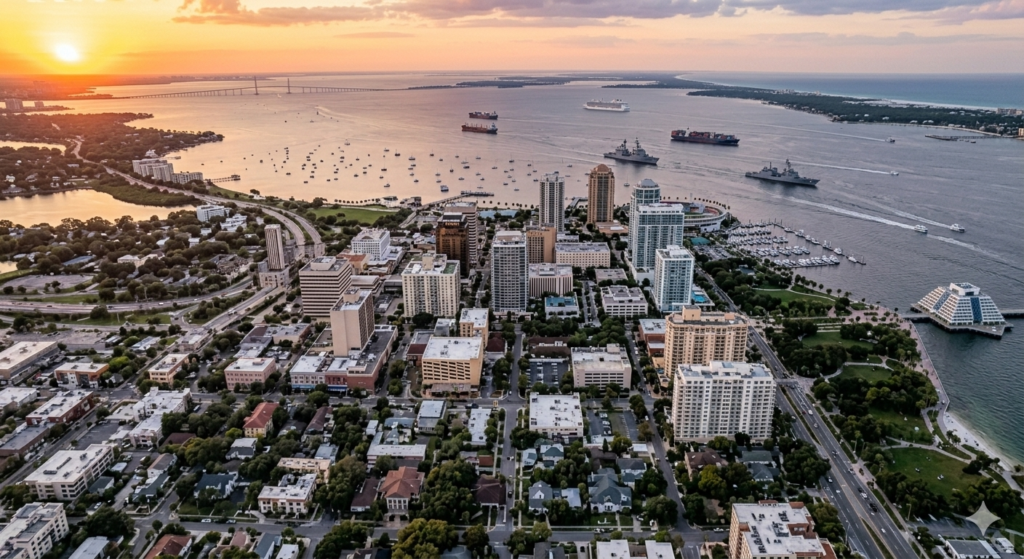
Why Drone Roof Inspections are Essential for Pensacola Property Owners
In the Pensacola area, your roof is the primary defense against 140–160 mph design wind speeds, intense Gulf Coast humidity, and corrosive salt air. As the “Western Gate to the Sunshine State,” Pensacola experiences a unique blend of heavy Panhandle thunderstorms and relentless UV radiation that can degrade shingles and metal fasteners 30% faster than the national average.
Increasingly, Escambia and Santa Rosa County homeowners are ditching the ladder for drone roof inspections. This technology provides a faster, safer, and more data-rich alternative to traditional methods, allowing for “micro-inspections” of every shingle, tile, and seal without ever stepping foot on your property.
Why Pensacola is Going Aerial in 2026
-
The 15-Year Roof Rule (SB 808): Effective July 1, 2026, Florida insurers cannot refuse to renew a policy solely based on roof age if an inspection proves it has 5+ years of life remaining. A drone’s high-resolution “Health Report” is your best legal defense against unnecessary roof replacements.
-
Panhandle Storm Resilience: Pensacola is a high-impact zone. Drones provide the high-resolution proof required to verify that your roof’s uplift-resistant clips and secondary water barriers meet the 2026 Florida Building Code standards.
-
Salt-Air Oxidation: For properties in Perdido Key, Gulf Breeze, or Pensacola Beach, salt spray is a “silent killer” of metal roofs. Drones zoom in on fastener pitting and oxidation that the naked eye misses from a ladder.
-
AI-Powered Thermal Accuracy: Modern sensors identify “invisible” thermal leaks and moisture trapped under the historic clay tiles of North Hill or the flat TPO roofs common in Downtown Pensacola.
What is a Professional Drone Roof Inspection?
A drone roof inspection utilizes an Unmanned Aerial Vehicle (UAV) equipped with specialized sensors to conduct a 360-degree audit. While a human inspector might struggle with the steep, complex pitches of historic homes in East Hill, a drone captures every angle in 4K or 5.1K high-definition.
What we detect with aerial precision:
-
Wind & Uplift Damage: Spotting “chattered” shingles or loosened ridge vents after a Gulf storm.
-
Thermal Anomalies: Using infrared to find hidden moisture or insulation gaps (key for lowering high Florida Power & Light cooling bills).
-
Debris & Clogs: Identifying “pine needle dams” and oak debris common in Pensacola’s wooded neighborhoods that trap moisture and cause rot.
-
Solar Health: Specialized scans for homes with rooftop solar arrays to ensure peak efficiency amidst the Panhandle’s pollen and salt film.
The Benefits: Why Aerial Beats the Ladder
1. Superior Safety & Zero Foot Traffic
Traditional inspections involve “walking the roof,” which can crack fragile tiles or displace granules on aging shingles. Drones provide a non-contact solution that protects the integrity of your roof—critical for preserving the historic character of Belmont-DeVilliers.
2. Rapid Turnaround (Under 20 Minutes)
A drone can map a standard 3,000 sq. ft. Pensacola home in 15 to 20 minutes. This efficiency is critical after a major tropical event when local roofing contractors are backlogged for months.
3. Insurance-Ready “Digital Twins”
In 2026, Florida insurance carriers prefer the time-stamped imagery provided by drones. These “digital twins” provide indisputable evidence for claims, helping homeowners avoid the “wear and tear” denials that frequently follow Panhandle storms.
4. Coastal-Specific Zoom
For properties along the Pensacola Bay or the Intracoastal, access can be difficult. Drones can safely inspect roofs overhanging the water or high-pitch coastal estates without the need for expensive scaffolding or lifts.
2026 Pricing Guide: Pensacola Market Rates
*Numbers above are estimated given current Panhandle market trends and subject to change.
Is it Legal? FAA & Pensacola Airspace
Yes, but Pensacola has some of the most restricted airspace in the country due to our military presence. In 2026, operations are governed by:
-
FAA Part 107: Every commercial operator must be FAA-certified.
-
Military Coordination: Pilots must navigate complex “No-Fly Zones” and restricted areas surrounding NAS Pensacola, Saufley Field, and Whiting Field. Professional pilots handle the LAANC authorizations required to fly safely.
-
Remote ID: As of 2026, all drones must broadcast a digital “license plate” for safety and security.
-
Privacy (SB 1422): Florida law prohibits “surveillance.” Professional providers use automated flight-path software to ensure only your property is captured.
Pro Tip: Always ask your provider for their FAA Certificate number, you can also look for it here on Drone Ripper USA, and proof of Aviation Liability Insurance before they take off near military installations.
Find certified drone service providers in Florida here!
When to Schedule Your Pensacola Inspection
-
Post-Storm: Immediately after any wind event exceeding 50 mph to document “fresh” damage.
-
Real Estate Transactions: Provide a “Roof Health Report” to close deals faster in Beulah or Cantonment.
-
Annual Maintenance: Detect UV-related shingle “curling” before the summer rainy season starts in June.
-
Commercial Flat Roofs: Identify potential “ponding water” issues on flat roofs before the high humidity leads to internal mold.
Find Your Pensacola Drone Expert Today
Ready to see your roof from a new perspective? DroneRipperUSA connects you with the highest-rated, FAA-certified drone pilots in Pensacola.